








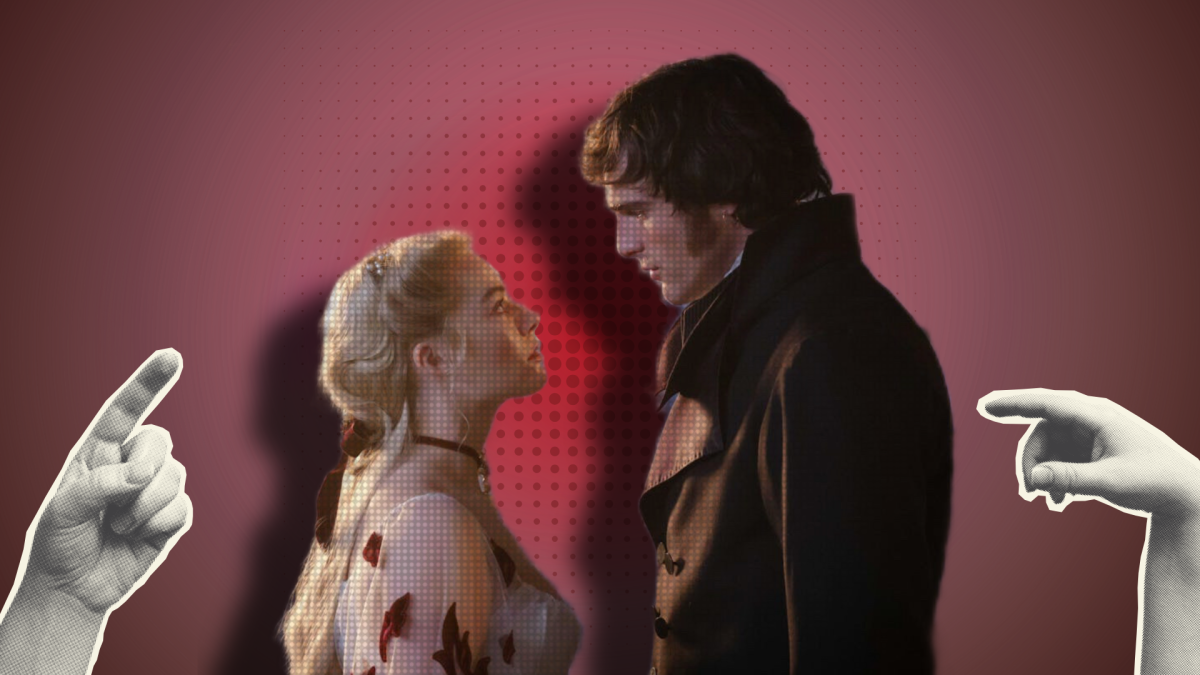
The internet has declared war on director Emerald Fennell whose 2026 film adaptation of Wuthering Heights has drawn fierce criticism for its bold departures from Emily Brontë’s beloved novel—but this is hardly new territory for the book. In the nearly 180 years since its publication, Wuthering Heights has been reimagined on screen more than 30 times. So what makes Fennell’s version the one that broke the internet?
Wuthering Heights follows Catherine “Cathy” Earnshaw, a woman from a wealthy family on the Yorkshire moors in England, who falls in love with Heathcliff, an abandoned boy her father takes in. Although not a conventional horror story, it is a gothic story often tied to the genre as it contains psychological and atmospheric elements that make the story unsettling. The novel’s unlikable characters and themes of obsession and vengeance were groundbreaking during a time of wholesome Victorian stories.
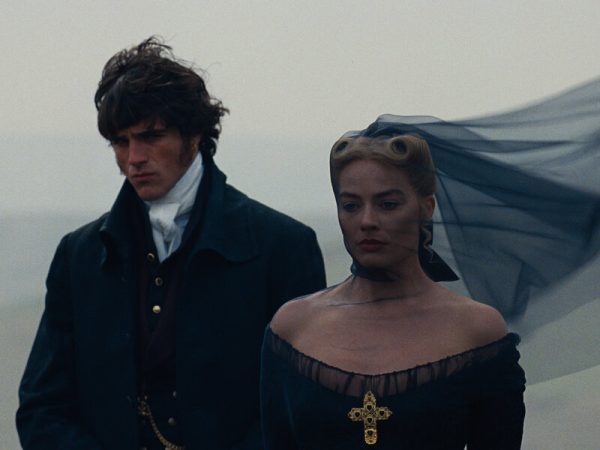
Fennell’s film struggles as a true adaptation. Margot Robbie stars as Cathy, with Jacob Elordi as Heathcliff, and the casting of Elordi has drawn significant criticism for the erasure of Heathcliff’s racial otherness. There is also the matter of Margot Robbie, who was perhaps not the first person audiences pictured brooding on the Yorkshire moors due to her being significantly older than Brontë’s Catherine. Equally controversial is the film’s pronounced sensuality. The artistic liberties left some viewers with the nagging sense that they were sold Wuthering Heights and handed something else entirely.
Despite the criticism, Fennell never promised to be true to the source material. Rather than a faithful retelling, Fennell stated early on that she wanted to capture the electric feeling of encountering Brontë’s story for the first time as a teenage girl.
“I can’t say I’m making Wuthering Heights,” Fennell said in a Fandango interview. “What I can say is I’m making a version of it.”
This was an honest admission, and arguably a refreshing one. The discussion surrounding Wuthering Heights is focused too much on accuracy.
Creative divergence from source material is not, in itself, a flaw. Despite popular opinion, I hesitate to call this film bad. It is an engaging watch, and I cannot recall a single moment in the theater where my attention drifted. Fennell is an inventive director, and it shows clearly in her work. The opening scene, which I won’t spoil, is probably the most memorable scene from a movie I have seen in months. It completely subverts the audience’s expectation, using assumptions about the film’s erotic reputation against viewers in a way that left me genuinely surprised.
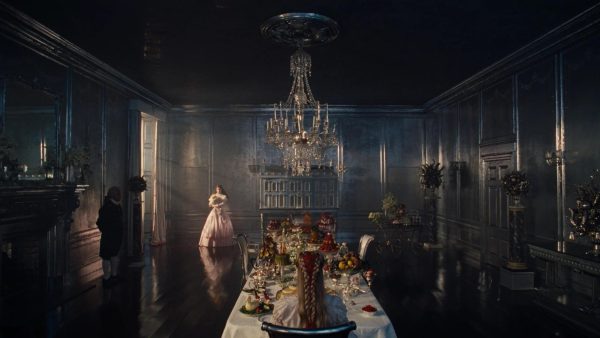
Fennell’s greatest strength is her visuals. The film is gorgeous, despite its aesthetic choices not being strictly period-accurate. Where other adaptations had leaned into dutiful historical recreation, Fennell opts for something more artistic. One of my favorite scenes was the montage in the Linton estate, where the lush and almost suffocating opulence of Cathy’s new life is rendered in a way that is beautiful as it is unsettling.
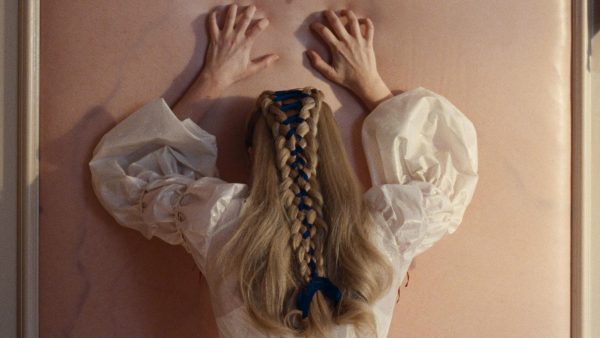
The costuming allows a similar expressive logic, favoring things like mood and silhouette over historical authenticity, dressing the characters to reflect their inner selves. Each look is so meticulously constructed that the film could be paused at almost any frame and hung on a wall. Central to this visual identity is Fennell’s use of the color red. Rather than mere decoration, it functions as a recurring motif tied to desire, danger and the consuming nature of Heathcliff and Cathy’s bond.
Another highlight of the movie is the film’s score, by popstar Charli XCX. Although it may seem strange to have modern music in a period piece, it oddly fits, adding haunting and passionate undertones to scenes. Together, these choices make a captivating film, and, although it may stray from Brontë’s, it’s an interesting interpretation that captures some of the story’s spirit.
Perhaps the most honest way to discuss Fennell’s Wuthering Heights is to hold two things in mind at once. As a piece of cinema divorced from the novel, it is bold and visually beautiful. However, adaptation is not just creation; it is an act of translation, and something is always lost in translation. A lot had been lost here: the racial dimension of Heathcliff’s suffering, the complexity of Brontë’s narrative, the sense that this story is as much about class and cruelty as it is about passion. These are not footnotes to the novel—they are its spine. Strip them away, and you have something that looks like Wuthering Heights, feels like Wuthering Heights on the surface, but is not actually an adaptation. Fennell has made a film worth watching, but has not made Wuthering Heights, and she was the first to say so.